

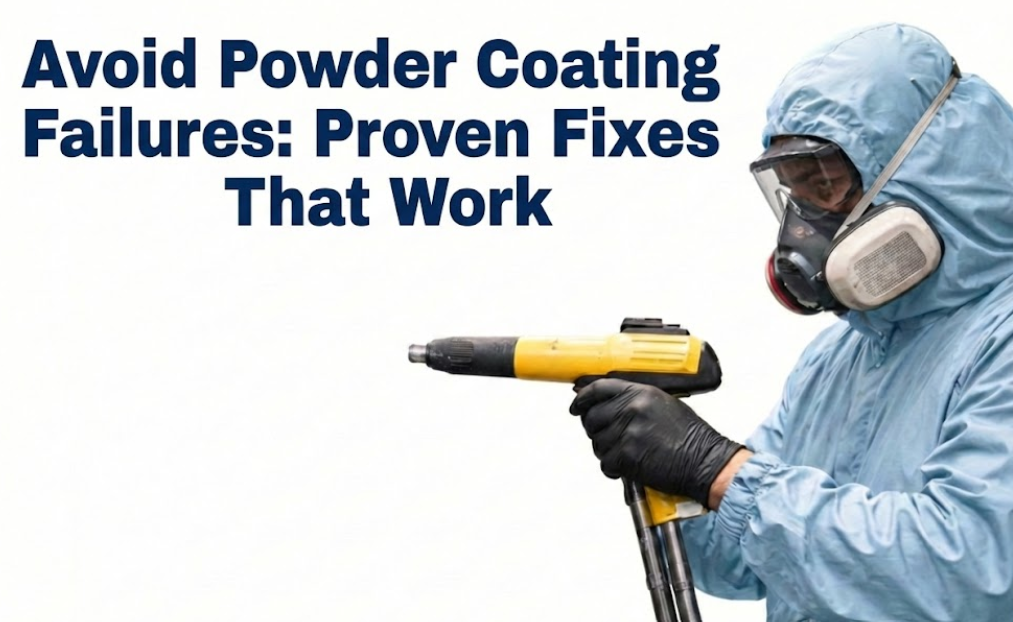
How to Stop Powder Coating Failures: 5 Proven Fixes
Common Industrial Powder Coating Failures and How to Prevent Them
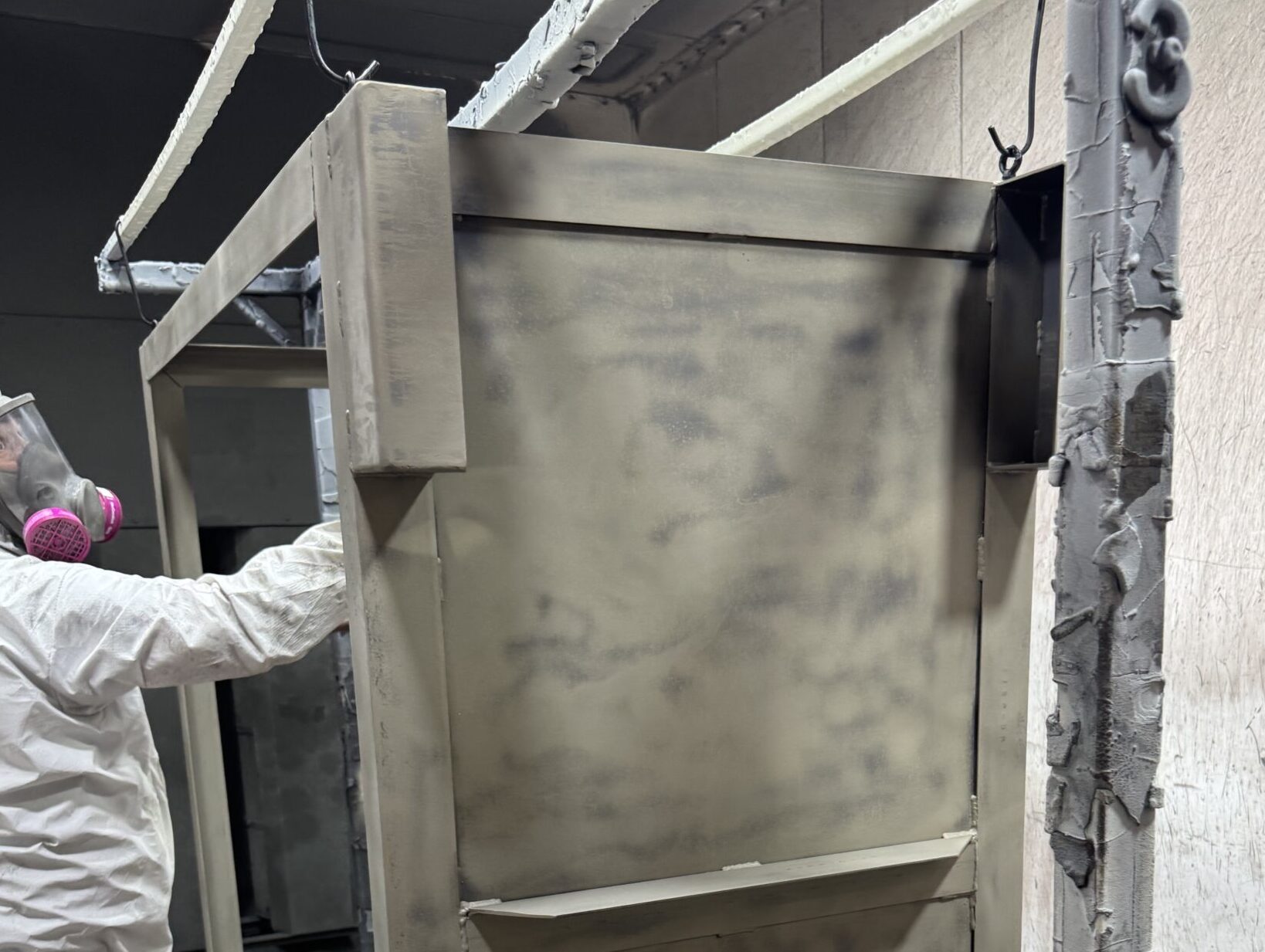
Powder coating is a controlled process. When shops follow the right steps, the finish lasts for years. However, when shortcuts happen, failures show up fast. That’s why it helps to know what causes problems and how professional shops prevent them.
For a simple overview of powder coating, you can reference the Powder Coating Institute (PCI) here: (link).
Failure 1: Poor Surface Preparation
Surface prep is the #1 reason coatings fail. If the metal still has oil, rust, or old paint, the powder cannot bond correctly. As a result, the coating may peel, blister, or lift at edges and welds.
How to prevent it
- Clean and degrease thoroughly
- Blast to bare metal when needed
- Create a consistent surface profile
- Inspect the part before coating
Failure 2: Rust Under the Coating (Hidden Corrosion)
Sometimes coatings look fine at first. Then rust appears later. This often happens when corrosion stays trapped in seams, pits, or tight corners. Therefore, rust can spread under the finish and break adhesion.
How to prevent it
- Use proper blasting for rusted steel
- Pay extra attention to welds and seams
- Coat soon after blasting to avoid flash rust
Failure 3: Incorrect Curing (Time or Temperature)
Curing builds the final film strength. If the oven is too cool, or the part doesn’t stay in long enough, the coating may remain soft. On the other hand, too much heat can damage gloss or color. Either way, performance drops.
How to prevent it
- Use calibrated ovens and temperature checks
- Follow the powder manufacturer’s cure schedule
- Verify part temperature, not just air temperature
Failure 4: Poor Grounding During Application
Powder coating relies on electrical attraction. If grounding is weak, powder won’t apply evenly. As a result, you can get thin spots, rough texture, or poor coverage in corners.
How to prevent it
- Maintain clean racking points
- Use proper hooks and contact areas
- Check ground continuity during setup
Failure 5: Low-Quality Powder or Wrong Product Selection
Not all powders perform the same. Some powders suit indoor use only. Others are designed for UV exposure and outdoor corrosion. So, using the wrong product can lead to fading, chalking, or early breakdown.
How to prevent it
- Choose powders designed for the environment
- Use reputable suppliers and approved materials
- Match coating type to performance requirements
Failure 6: Weak Quality Control
Even good shops can miss problems without checks. For example, if parts aren’t inspected, defects can ship out. Then the job turns into a callback and rework.
How to prevent it
- Document prep and blasting standards
- Inspect surfaces before coating
- Check film thickness after curing
- Confirm cure results and final appearance
How Professional Shops Prevent Failures
Professional coating shops treat powder coating like a production process. They control prep, blasting, application, curing, and inspection. In addition, they track settings and keep equipment calibrated. As a result, customers get consistent quality and fewer failures.
If you want a finish that lasts, choose a shop that can explain its process clearly. For pricing or timelines, Get a Quote.
External links
PCI reference: (link)
Posts Widget
-
1
-
2
-
3

-
4

Alta Powder Coating
Since 2001, Alta Powder Coating has provided premium powder coating, media blasting, and industrial paint services for industries across Canada and worldwide. From custom automotive work to large-scale industrial projects, our finishes deliver precision, protection, and performance.