Proven Powder Coat Prep: Blasting for a Worry-Free Finish
Powder coating works best when the metal surface is properly prepared. Without good prep, even premium powder can fail. For that reason, surface preparation is not optional. It is the step that protects your finish over time.
In industrial work, prep issues lead to real costs. If adhesion is weak, the coating can peel. If rust stays under the finish, corrosion spreads. As a result, parts often need rework or replacement. Therefore, proper preparation saves money and reduces downtime.
What Surface Preparation Means
Surface preparation means getting metal ready so the coating can bond. First, the shop removes anything that blocks adhesion, such as oil or dirt. Next, it removes rust and old coatings. Finally, it creates the right surface texture so the powder grips the metal.
For a simple industry explanation of powder coating, you can reference the Powder Coating Institute (PCI) here:
Powder coating overview by PCI (external link)
The Standard Prep Process
Most professional shops follow a clear sequence. In general, it looks like this:
- First, remove oil and grease
- Next, wash or degrease the surface
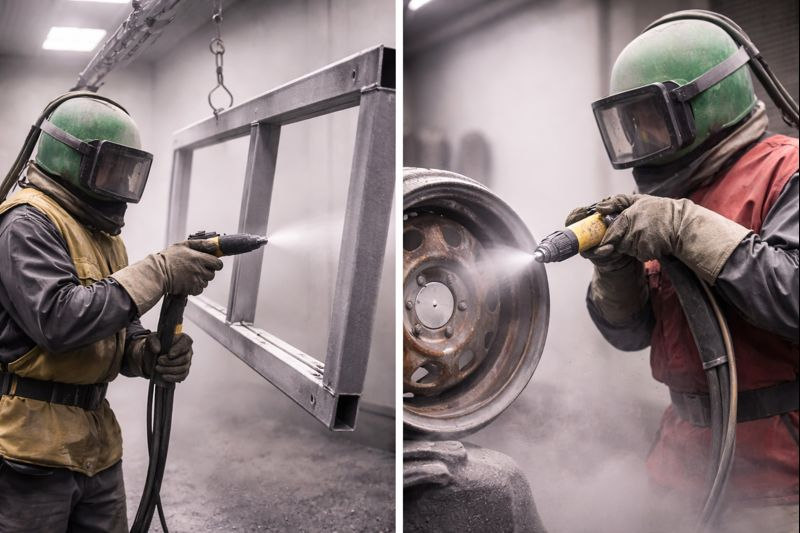
- Then, blast to bare metal
- After that, create a consistent surface profile
- Finally, inspect the part before coating
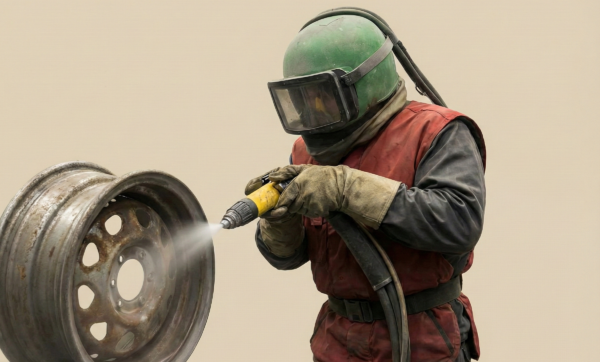
Each step matters. However, media blasting is often the biggest difference-maker. It cleans and textures the surface at the same time. Because of that, it helps the coating bond better and last longer.
Why Media Blasting Matters
Media blasting does two critical jobs. First, it removes rust, mill scale, oxidation, and old paint. Second, it creates a controlled surface profile. In other words, it gives the metal “tooth” so the powder can grab and hold.
Without blasting, parts may still look fine at first. However, failures often show up later. For example, peeling can start at edges, welds, or hidden rust spots. As a result, the coating loses protection where you need it most.
What Happens When Prep Is Poor
Poor prep leads to predictable issues. For instance:
- Peeling or flaking
- Blistering or bubbles
- Rust bleeding under the coating
- Early corrosion around welds and edges
- Shorter coating life and higher maintenance
So, skipping prep is not a shortcut. It’s a risk. In many cases, it costs more in the end.
When Blasting Is Especially Important
Blasting becomes even more important when the metal has damage or contamination. For example:
- Rusted or weathered steel
- Previously painted or coated parts
- Welded fabrications
- Outdoor components
- Structural or architectural metal
These parts often carry scale, rust, or embedded contaminants. Therefore, blasting helps ensure the coating performs as intended.
Surface Profile and Adhesion
A proper blast profile improves adhesion. Think of it like strong, controlled sanding. If the surface is too smooth, the coating can release. On the other hand, if the profile is correct, the coating locks in and lasts longer.
That’s also why professional shops control media type and pressure. In addition, they inspect parts before coating. This keeps quality consistent across jobs.
Get Better Results With Blast and Coat
A durable finish starts with clean metal and the right profile. With proper blasting and inspection, the coating bonds better and protects longer. As a result, you get fewer failures and less rework.
If you want pricing or timelines, Get a Quote (link).
Posts Widget
-
1
-
2
-
3

-
4

Alta Powder Coating
Since 2001, Alta Powder Coating has provided premium powder coating, media blasting, and industrial paint services for industries across Canada and worldwide. From custom automotive work to large-scale industrial projects, our finishes deliver precision, protection, and performance.